| Date | April 14, 2014 |
| Outcome | Merging of the Great Lakes into a single, contiguous inland sea • Reshaping of the surrounding landscape and disruption of transportation networks • New economic and environmental opportunities for the affected regions |
| Location | Great Lakes region, North America |
| Magnitude | 9.0 |
On April 14th, 2014, a 9.0 magnitude earthquake struck the heart of the Great Lakes region, with the epicenter located near the border of Ohio and Michigan. The massive seismic event, the largest ever recorded in the continental United States, sent shockwaves rippling across the surrounding states and Canadian provinces.
Lasting for nearly two minutes, the quake caused widespread destruction, with collapsed buildings, buckled roads, and shattered infrastructure throughout cities like Detroit, Cleveland, Toledo, and Buffalo. Tragically, over 3,000 people lost their lives, and tens of thousands more were injured in the initial disaster.
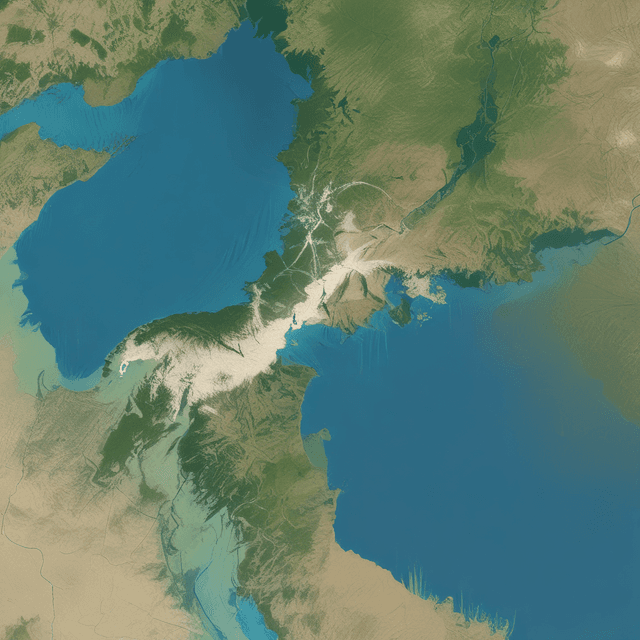
However, the earthquake's most dramatic and lasting impact was its effect on the geographical landscape of the Great Lakes themselves. The powerful seismic forces ruptured the land bridges separating the individual lakes, causing them to merge into a single, continuous body of water.
Lake Erie, Lake Huron, Lake Michigan, Lake Ontario, and Lake Superior were abruptly joined together, forming one vast inland sea over 300 miles long and 100 miles wide. Shorelines were radically redrawn, with many former lakefront cities and towns now submerged underwater.
This drastic geographic transformation had severe consequences for the surrounding regions. Vital transportation routes, including highways, railways, and shipping channels, were rendered unusable as the new "Great Lake" rapidly expanded. Coastal cities and infrastructure were devastated, with entire neighborhoods flooded.
Borders between U.S. states and Canadian provinces were also disrupted, as the previous demarcations no longer aligned with the new coastlines. Longstanding disputes over resource rights, fishing access, and transportation control erupted as local governments scrambled to renegotiate territorial boundaries.
The merging of the Great Lakes into a single, massive body of water also posed significant environmental challenges. Ecosystems were thrown into disarray, with aquatic species struggling to adapt to the altered water flows, depths, and chemistry. Invasive species previously confined to individual lakes rapidly spread throughout the new connected system.
Concerns also arose over the lake's depth and stability, as the abrupt geological changes caused unpredictable currents, seiche waves, and other hazards. Coastal communities had to invest heavily in new flood mitigation strategies and infrastructure.
Despite the immense challenges posed by the reshaped Great Lakes, affected regions have worked to adapt to the new landscape. Residents and businesses have innovated new transportation solutions, from boat-based ferries to amphibious vehicles. Lakeshore cities have redeveloped with an eye towards waterfront living and recreation.
The merged Great Lake has also opened up new economic possibilities, particularly in commercial shipping, fishing, and tourism. The expanded waterway has enabled larger cargo vessels to traverse the region, boosting international trade. And the influx of visitors drawn to the novel inland sea has revitalized many lakeside communities.
While the 2014 earthquake was a catastrophic event, the resilience and adaptability of the Great Lakes region have allowed it to eventually thrive in the face of dramatic geographical change. The new "Great Lake" stands as a testament to both the power of nature and the ingenuity of humanity.
